July 31, 2026





BBC Radio3 Record Review
Andrew McGregor selects the best new classical music releases and is joined by Allyson Devenish to hear her favorite 5 recordings of music by this week’s Proms Composer, Aaron Copland.

THE MAKING OF RODEO
NOTES ON THE ALBUM
Many will have heard Copland’s name in reference to works such as Appalachian Spring, Billy the Kid, and Fanfare for the Common Man, but his piano works remain virtually unknown. Years ago, I had the privilege of performing on the BBC Total Immersion Series, a weekend of concerts dedicated to one composer, and a fascinating way to become more intimately familiar with a composer’s body of work. In many ways, this was the impetus that led me to program an all-Copland recital, his piano works being the perfect microcosm of his overall output, and a wonderful representation of the vast array of compositional moods and styles that can be found in his writing.
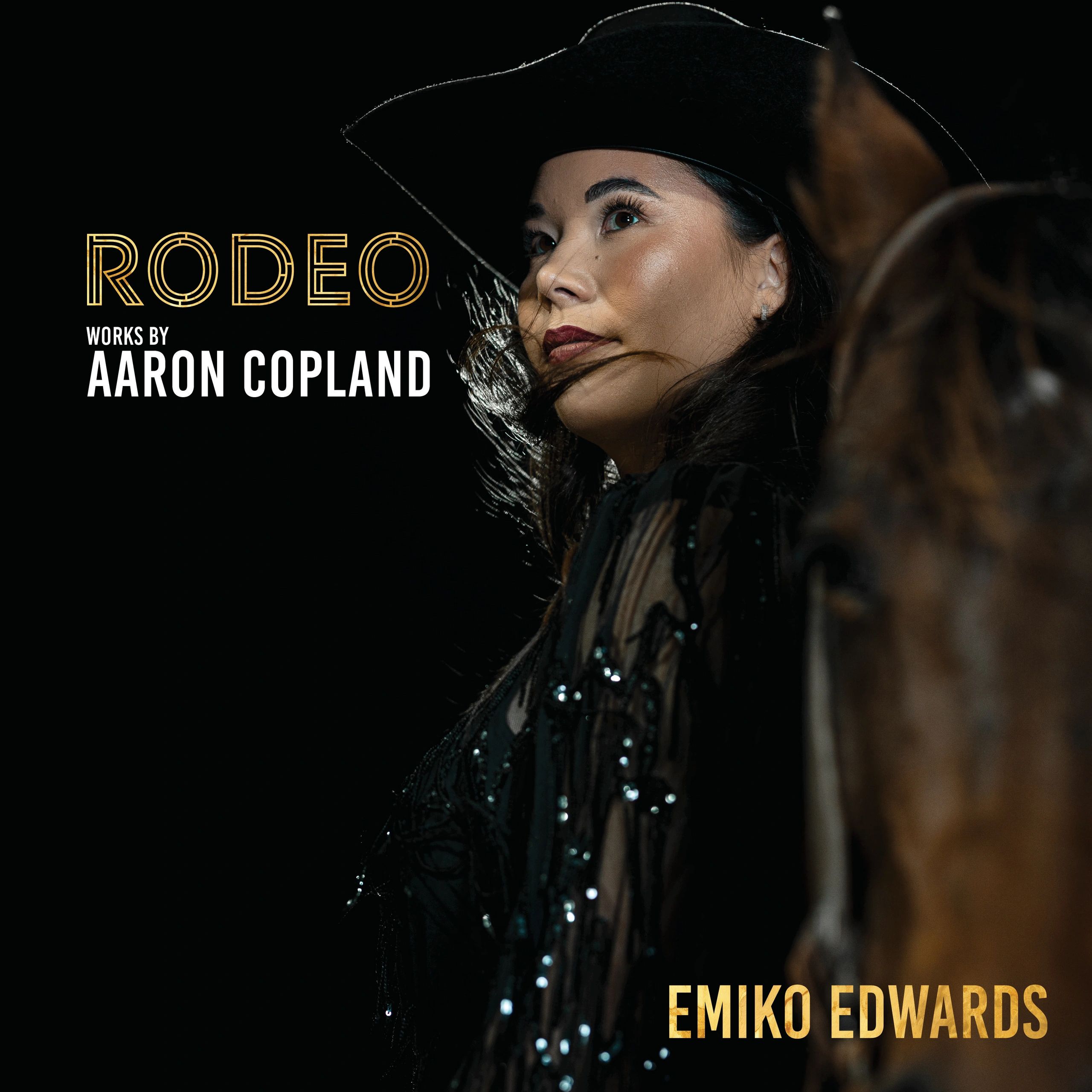
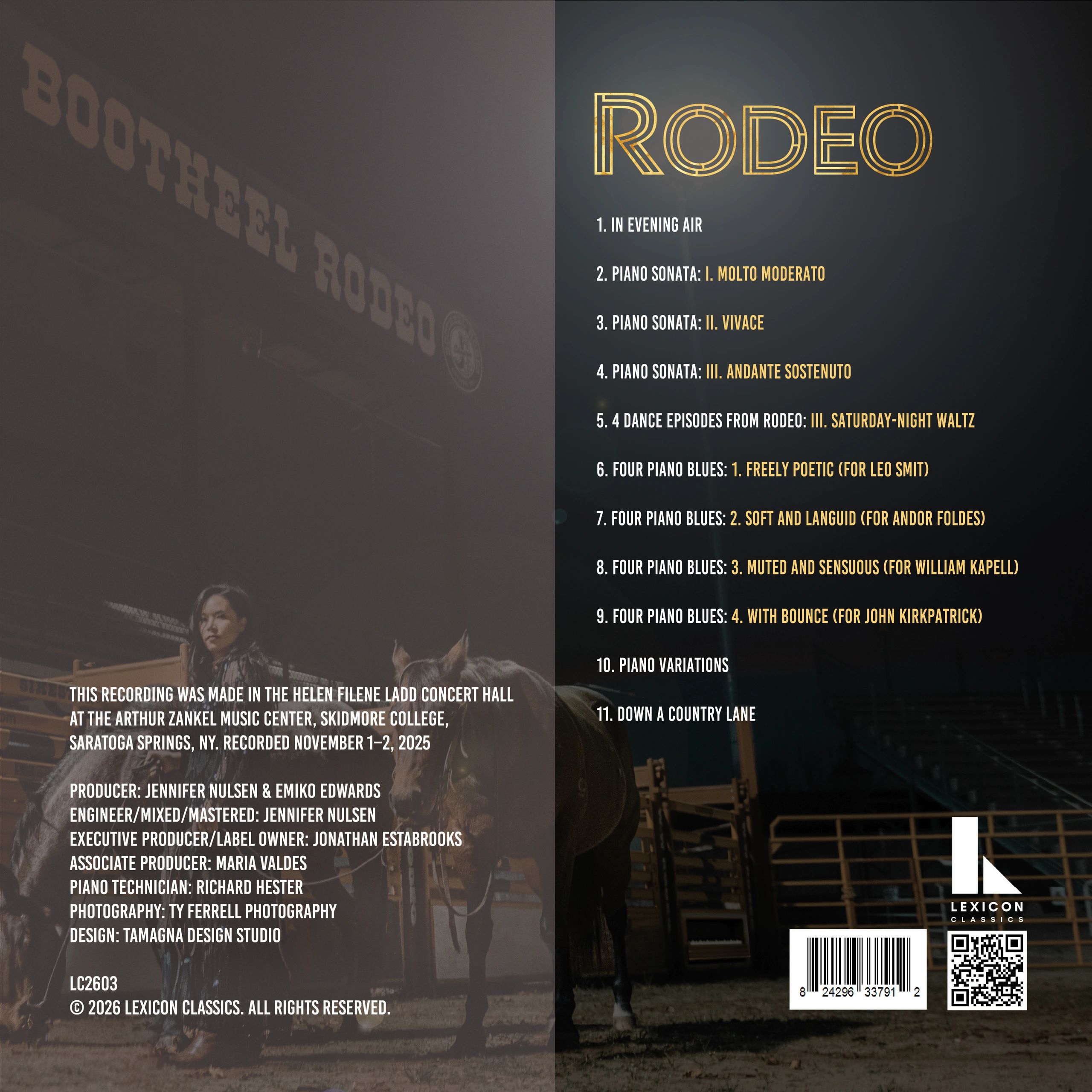
This album was a true labor of love. Created with the 2026 America250 season in mind, it reframes Copland’s piano music through the lens of the American cultural landscape, moving from rugged, rarely heard works to lyrical, jazz-inflected gems, inspired in part by my recent move to one of the nation’s most storied rodeo towns. What better way to celebrate America250 than an album dedicated to the “Dean of American Music?” Co-produced and recorded by 3× GRAMMY nominee Jennifer Nulsen at the Arthur Zankel Music Center, the recording process took place mere steps from Yaddo, the artist colony where Copland premiered his Piano Variations. The photography for the album was captured by rodeo photographer Ty Ferrell at the Sikeston Jaycee Bootheel Rodeo grounds.
The album begins with In Evening Air, the material rooted in an earlier work, the film score for The Cummington Story (1945). A World War II propaganda film, it depicts the assimilation of immigrant refugees into American society. It is followed by his Piano Sonata (1941), a true war sonata, tragic in nature, and written in the romantic style. In his autobiography Copland reflects on the great uncertainty and anxiety of the times and you can certainly hear its effect in the score. The first movement is painful and expansive, the second, though marked Scherzo and humorous at times, is riddled with the sound of ricocheting bullets, and the third, a requiem, oscillates between moments of hope and despair.
With Saturday-Night Waltz (the third episode from Copland’s ballet Rodeo) comes a reprieve. Choreographed by Agnes de Mille, the ballet tells the story of a cowgirl in search of love. Initially infatuated with the Head Wrangler (who has his eyes set on the Rancher’s Daughter), she instead finds happiness with the Champion Roper having gone through a complete makeover, or as Agnes de Mille put it, “The Taming of the Shrew—cowboy style.” This is followed by the Four Piano Blues, each dedicated to a prominent pianist and each prefaced by wonderfully descriptive words: no. 1 Leo Smit, “Freely poetic,” no. 2 Andor Foldes, “Soft and languid,” no. 3 William Kapell, “Muted and sensuous,” and no. 4 John Kirkpatrick, “With bounce.”
In stark contrast, the Piano Variations, is the most modern and dissonant work of the set. It was most influenced by his studies with Nadia Boulanger, each variation written individually before being pieced together. Leonard Bernstein was a huge proponent of the work writing, “I had dug up and learned as much of [Copland’s] music as I could find; the Piano Variations had virtually become my trademark. I was crazy about them then—and I still find them marvelous today—but in those days, I especially enjoyed disrupting parties with the work. It was the furthest you could go in avant-garde ‘noise,’ and I could be relied upon to empty any room in Boston within three minutes by sitting down at the piano and starting it.” Both technically and musically fulfilling to play, it is remarkable how many colors, textures, and characters Copland creates using such a stark theme.
And finally, to conclude the album is Down a Country Lane. Beautiful in its simplicity, it serves as a palate cleanser after the tumultuous ending of the Piano Variations. If you have the time, I encourage you to listen to the album in one sitting. Each piece has been thoughtfully curated to showcase a different facet of the composer’s writing. You might even be surprised to discover that they were all written by the same person.
With gratitude,
Emiko Edwards

This website uses cookies.
We use cookies to analyze website traffic and optimize your website experience. By accepting our use of cookies, your data will be aggregated with all other user data.